
Pornography Addiction Counseling
Most men who struggle with pornography have tried to stop on their own more than once. They know something is wrong. They just don't know how to get out.
Counseling with a trained clinician who takes both the clinical and spiritual dimensions seriously can change that.
Call (888) 808-6050 · Sessions available in-person across Virginia and via telehealth

Why It's Hard to Stop on Your Own
"It's not the pornography men want. It's the chase. The lure that takes you there. And the shame cycle that follows is just as predictable as the urge that started it."
Zach Clinton, Ph.D., L.P.C.Pornography offers something almost no other behavior can match: immediate satisfaction that requires nothing from you. No relationship to maintain. No effort to invest. Just a dopamine rush, available whenever stress peaks, loneliness hits, or exhaustion sets in. That's why high-performing men, men who succeed in every other area of life, often find themselves most susceptible. The one area where they don't have to perform is also the one area where the pattern quietly deepens.
Neurologically, what's happening is straightforward: what fires together, wires together. Every time someone turns to pornography, the brain strengthens that pathway. Over time the brain doesn't just crave the content itself, it craves the buildup, the anticipation, the chase. And when the dopamine crash follows, the brain asks one question: what was the last thing that made me feel that way? The answer is always the same, which is why people go back even after they've decided they won't.
Willpower alone doesn't interrupt this cycle because willpower operates from the same brain that's been rewired to return to the behavior. The patterns have to be understood, named, and replaced, not just suppressed.
Is This a Sin Problem or an Addiction? Both.
Pornography addiction isn't formally listed in the DSM-5. Compulsive sexual behavior disorder appears in the ICD-11, but the clinical debate about classification continues. Many men who sit with that uncertainty end up asking a different question: am I struggling with sin, or am I struggling with an addiction?
The answer, clinically and theologically, is that these aren't mutually exclusive. Pornography is a behavioral addiction, and it's also idolatry, turning to something instead of turning to God. Sin is whatever separates us from Him. When someone is repeatedly, compulsively returning to pornography despite genuine desire to stop, that's both things at once. Treating it as only a sin problem leaves the clinical patterns unaddressed. Treating it as only a behavioral disorder removes the spiritual dimension that's often central to a person's identity and pain.
The enemy rules by shame, and shame keeps this in the dark. What you hold in secret has power over you. Bringing it into an honest conversation begins to dissolve that power.
There's clinical evidence and theological grounding for the same truth: shame can't survive being spoken plainly. That's not because confession fixes everything, but because bringing it into the light with a trained clinician removes the power secrecy gives it.
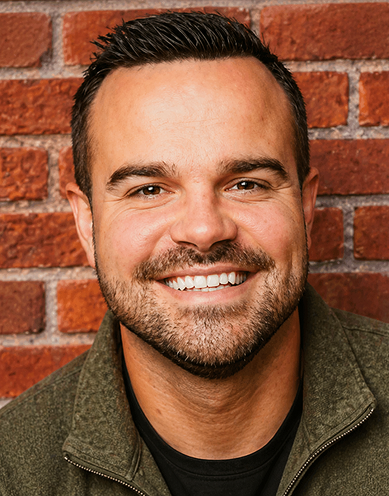
A Clinician Who Understands This Work From the Inside
Zach Clinton's approach to this work is shaped by more than clinical training. He draws on personal experience with the shame cycle that keeps men stuck, what it actually feels like to carry something in secret, and what it takes to finally put it down. That background informs how he sits with clients: without judgment, without surprise, and without the clinical distance that makes men feel like a case study rather than a person.
Zach Clinton holds a Ph.D. in Counselor Education and Supervision from Liberty University and is a Licensed Professional Counselor. His clinical focus is men's mental health, high-performing individuals, and athletes, three groups where pornography use is particularly common and particularly hidden. He works with clients at Light Counseling's Virginia locations and via telehealth.
What Treatment Actually Looks Like
The first session isn't about confronting the addiction. It's about understanding the person. At Light Counseling, the intake assessment covers four dimensions:
Biological
Any physical factors affecting sleep, stress, energy, or neurological patterns that intersect with compulsive behavior.
Psychological
Intrusive thoughts, urges, temptations, patterns of thinking that trigger emotional states that lead to behavior.
Social
Support network, relational health, family history, attachment patterns. Pornography often fills the space left by unmet relational needs.
Spiritual
The client's faith background, their interest in incorporating spirituality into treatment, and how their beliefs intersect with shame and identity.
From the second session onward, the clinical work is primarily Cognitive Behavioral Therapy (CBT), tracing the thought that triggers a craving, the emotional state that follows, and the behavior that results. Pornography use often functions almost like OCD: an obsessive thought arrives, creates a compulsion, and the compulsion feels impossible to resist without acting. CBT interrupts that chain before the behavior, not after.
Family history matters too. Many men trace their first exposure back to childhood, sometimes as young as eight. Some experienced sexual abuse and discovered pornography as a coping mechanism years later. Understanding where the pattern started is part of changing where it goes.
The Notice-Shift Principle
A common misunderstanding about recovery is that the goal is to eliminate urges. It isn't. The goal is to notice an urge rising, accept that it's there, and redirect attention before it becomes action. Urges function like waves. They build, crest, and pass. Most men relapse not because the urge was too strong, but because they tried to fight it head-on rather than shift their attention away from it while it peaked.
Scripture addresses this directly. 2 Corinthians 10:5 describes taking every thought captive, not eliminating thoughts, but recognizing them and making a choice about what follows. The clinical practice and the biblical instruction are describing the same thing.
Replacing the Dopamine Rush
Pornography delivers what clinicians call a dopamine dump, an intense, immediate spike that the brain quickly builds tolerance to, requiring more content at higher frequency to produce the same effect. The healthier alternative isn't to suppress that neurological need but to replace the source: what Zach calls a dopamine drip, the kind that comes from time in nature, face-to-face conversation, physical exercise, creative work, and being genuinely known by another person.
These aren't consolation prizes. They produce something pornography never can: a relationship with your own life that doesn't require you to hide anything.
Where Are You in the Process?
Recovery doesn't happen in a straight line. The clinical model that best describes how behavioral change actually works involves five stages:
Pre-contemplation
The behavior doesn't feel like a problem yet, or the costs of changing feel too high. Many men stay here for years.
Contemplation
Something has shifted, a discovery, a crisis, a moment of clarity, and the person is starting to consider what life could look like without this. Most people reading this page are here.
Preparation
Actively getting ready, researching counselors, telling a trusted person, removing access points. The decision has been made, the action hasn't started yet.
Action
Showing up to sessions, using the tools, doing the work. This is where the clinical relationship matters most, not to motivate, but to equip.
Maintenance
The most underestimated stage. Change has happened, and the work now is not letting familiarity pull you back. The voice of an old habit doesn't disappear, it just gets quieter as the new patterns get stronger. Don't let a speed bump become a roadblock.
Lapse vs. Relapse
A lapse isn't the same as a relapse. Men who recover don't do it by never slipping, they do it by refusing to let one slip become permission for another. That distinction is something counseling can help hold, and it's often the difference between long-term recovery and returning to old patterns.
Who Zach Works With
Every man who walks through this door carries a different story. Here are the three groups Zach most often meets in the counseling room.


Whether You're Just Starting or Deep In
Zach works with men at the very beginning of recognizing the pattern, people who've never told anyone and aren't sure they'd call it an addiction. And men at the other end, whose wives have found out, whose marriages are in crisis, who've tried to quit ten times on their own and failed.
These aren't men who've given up on their faith or their marriages. Most of them are trying hard in every other area. This is the thing they can't get control of alone.

Available Statewide
In-person sessions at Light Counseling's Virginia locations (Lynchburg/Forest, Christiansburg, Glen Allen, Colonial Heights) and telehealth across Virginia and other states, so the first session doesn't require walking into an office in your city.

If You're a Parent, You're Not Too Late
The most protective thing a parent can do isn't monitoring software, though that can help make the behavior less convenient. It's building a home environment where a child knows they can bring anything without the relationship being at risk.
Average First Exposure
The age most children first encounter pornography today.
Accidental Exposure
Most first exposure happens by accident, a link, a pop-up, a friend.
The Key Question
"If I saw something I couldn't handle, would I tell my parents?"
Concerned About a Teenager?
Light Counseling's counselors work with adolescents and can advise parents on approach. Contact us to discuss options.
Does Accountability Software Work?
Tools like Covenant Eyes, Bark, and Pure Desire Ministries serve a real purpose: they make the behavior more inconvenient. For someone who is genuinely trying to stop, adding friction to access points can be the difference between acting on an urge and letting it pass.
They don't work as a primary strategy, because someone who is desperate enough will find workarounds. The brain that craves something is extraordinarily creative about getting it. The deeper question accountability software creates is the useful one: is this really worth it? If that question interrupts the chase long enough for the urge to pass, the software did its job.
The men who recover aren't the ones with the best filters. They're the ones who stopped negotiating with themselves about whether this time would be different.
Frequently Asked Questions
Everything you need to know about pornography addiction counseling.
Answered by Zach Clinton, Ph.D., L.P.C. Contact UsBoth can be true at the same time. Pornography is a behavioral addiction, clinically the same compulsive pattern you see in other process addictions, and it's also a spiritual issue. Sin is whatever separates us from God, and that separation is real. But treating it as purely a matter of willpower and repentance leaves the neurological patterns unaddressed. The brain has been rewired through repetition, and that rewiring requires active, sustained effort to change. Counseling addresses the clinical dimension. Faith addresses the spiritual one. You need both.
Trying to stop alone uses the same brain that has been conditioned to return to the behavior. The more you've turned to pornography in the past, the stronger that neural pathway is, what fires together, wires together. Counseling works differently because it maps the thought patterns that trigger cravings before they escalate, builds a toolkit of genuine alternatives, and creates accountability that operates outside your own head. The three most dangerous words a man can say are "I've got this." You weren't designed to fight this alone.
There's no fixed timeline, and anyone giving you a precise number is overpromising. Early neurological changes, dopamine receptors beginning to normalize, cravings becoming less frequent, typically start showing up within 90 days of consistent work. But recovery isn't a destination you reach after 90 days. It's an ongoing process that shifts from crisis management to maintenance. Some men work intensively for six months and then transition to periodic check-ins. Others find that annual accountability sessions are enough to stay on track long-term. The goal isn't permanent weekly sessions, it's building the internal architecture to live without this.
A lapse is not a relapse. The most dangerous moment after slipping isn't the slip itself, it's the thought that follows: "I already messed up, so what's one more?" That thinking is what turns a single incident into a full return to the pattern. Neuroplasticity works in both directions. The more you abstain, the easier abstaining gets. The more you return, the easier returning gets. One slip doesn't erase weeks of rewiring unless you let it. Counseling can help you hold the distinction between a speed bump and a roadblock.
Yes. Counseling sessions are protected by federal law (HIPAA) and professional ethics codes. Nothing you disclose in a session is shared without your written consent, with narrow legal exceptions (imminent risk of harm, mandatory reporting obligations related to child abuse). The fact that you've contacted Light Counseling isn't shared. Telehealth sessions are available for clients who prefer not to be seen entering a local office, which is a reasonable concern and one we accommodate without judgment.
It helps by adding friction, making the behavior more inconvenient and creating a moment of pause when the urge is building. Tools like Covenant Eyes and Bark serve a real purpose in that sense. What they can't do is address why you're reaching for pornography in the first place, and someone who is desperate enough will find ways around them. The most useful thing accountability software does is interrupt the chase long enough to ask: is this actually worth it? If that question creates a pause, the tool did its job.
The first session is an intake assessment, not a confrontation. Zach uses a biopsychosocial-spiritual framework that covers four areas: biological factors affecting health and behavior, psychological patterns including thought triggers and urge cycles, social context including relationships and support network, and spiritual background including how and whether you want faith integrated into the work. You won't be judged for what you've done or how long you've been struggling. The session exists to understand your situation, not to diagnose or correct you.
Ready to Talk to Someone?
Confidential consultations are available by phone or through our contact form. Sessions with Zach Clinton are available in person at our Virginia locations and via telehealth.
Schedule a Confidential ConsultationOr call (888) 808-6050, available Monday through Friday.
Light Counseling serves clients in Lynchburg, Forest, Christiansburg, Glen Allen, Colonial Heights, and Midlothian, Virginia, and via telehealth across Virginia and multiple states.
Confidential & Secure
Protected by HIPAA and professional ethics
Most Insurance Accepted
Including Medicaid and major plans
In-Person & Telehealth
Available across Virginia and beyond