
Counseling for Pastors and Ministry Leaders
You spend your life caring for others. Finding someone to care for you — who actually understands ministry — is harder than it should be. We can help.
A note on confidentiality: We understand the professional and relational stakes that come with seeking counseling in a ministry context. Sessions with our counselors are strictly confidential. What you share in our office stays there — including from church leadership, elder boards, and your congregation.
Why Ministry Leaders Rarely Seek Counseling
There's a well-documented pattern among pastors and missionaries: the people most in need of support are often the last to seek it. Ministry comes with an unspoken expectation of spiritual sufficiency. Asking for help can feel like an admission that your faith isn't strong enough, or that you're not equipped for the role you've been called to. For leaders in highly visible roles, there's also the question of perception — what will the elders think? What happens if someone in the congregation finds out? The result is that many pastors and missionaries carry an enormous amount alone. Burnout builds quietly. Marriages absorb the overflow. The very strengths that make someone effective in ministry — empathy, availability, a deep sense of calling — become liabilities without someone helping them tend to their own interior life.
The research is stark: According to Barna Group, 40% of pastors currently show a high risk of burnout — up from 11% in 2015. In 2021, 38% said they'd considered leaving ministry entirely in the past year. Regular peer support among pastors has dropped from 37% to 22% in seven years.
These aren't signs of weak faith. They're signs of a difficult calling without adequate support structures.
What Makes Ministry Different
Ministry shares a lot with other helping professions — the emotional labor, the weight of others' crises, the blurred line between work and identity. But several dynamics are specific to vocational ministry and don't map cleanly onto what a therapist who hasn't lived it would understand.No clear off hours
Pastoral ministry doesn't clock out. A call at 11pm, a crisis after Sunday's service, a congregant in the ER — the weight is constant, and the boundaries are hard to hold without feeling like you're failing your calling.Giving without receiving
Ministry leaders pour themselves out week after week — preaching, counseling, visiting, administrating — often without a peer or mentor who can offer the same quality of care they extend to others.Compassion fatigue
Years of sitting with grief, trauma, struggling marriages, and loss takes a cumulative toll. What once felt life-giving starts to feel like a burden. The empathy that fueled ministry begins to run dry.Identity tied to the role
For most pastors, ministry isn't just a job — it's a calling, a community, and a source of meaning. When something goes wrong with the role, it touches everything: your sense of self, your relationship with God, your purpose.Confidentiality concerns
In small communities, the pastor seeking counseling can quickly become known. The fear of being seen — by a congregant at a counseling center, by an elder who finds out — is real and deserves a real response.The modeling tension
Many ministry leaders feel they must project strength and stability for their congregation. An older generation hid their struggles; a newer generation increasingly sees vulnerability as part of honest testimony — but the tension is real either way.Ministry Families: Pastors' Kids, Missionaries' Kids, and Spouses
Ministry doesn't only affect the leader. Pastors' kids grow up in the fishbowl, held to a standard they didn't choose and watched by people they didn't ask to watch them. Missionary kids often grow up between cultures, returning to a "home country" that feels foreign, carrying losses that rarely get named. Pastors' and missionaries' spouses carry their own weight — often deeply involved in ministry themselves, often without formal recognition or support, and often the ones absorbing the emotional overflow from a spouse under chronic stress. Light Counseling works with ministry leaders and their families — individually, as couples, and in family counseling — because the people around a burned-out leader are rarely doing fine either.Recognizing Pastoral Burnout
Burnout in ministry develops gradually, which is part of why it goes unaddressed for so long. It rarely announces itself as burnout — it shows up as exhaustion that rest doesn't fix, a growing sense of going through the motions, or a quiet dread of Sunday that would have been unthinkable a few years earlier.Common signs:
Emotional exhaustion
A deep weariness that sleep and vacation don't touch. Feeling drained before the week even begins.Loss of passion for ministry
What once felt like calling now feels like obligation. Dreading the tasks that once gave life.Spiritual dryness
Believing the right things but unable to pray with any sense of connection. Scripture feels distant. God feels far.Isolation and cynicism
Withdrawing from relationships, including from God. Growing frustration with congregants, peers, or the institution of the church itself.
What our counselors bring to this work: At Light Counseling, we have providers with direct experience in ministry families — as pastors' kids, as missionaries' kids, as people who grew up inside the church. That lived context shapes how we work. We don't need things explained. We already know them.
What We Help Ministry Leaders Work Through
Our ministry-informed counselors work with a range of concerns specific to vocational ministry:Burnout and chronic exhaustion
Rebuilding capacity and learning to sustain long-term ministry without depleting yourself in the process.Anxiety and depression
Clinical support for leaders whose mental health is affected by the weight of the role, major transitions, or accumulated stress.Compassion fatigue
Restoring emotional capacity eroded by years of care work and crisis response.Marriage and family strain
Ministry puts distinct pressure on marriages and families. We offer Christian marriage counseling for ministry couples alongside individual and family work.Spiritual crisis and deconstruction
The dark night of the soul is a real phenomenon. Counseling can hold space for faith questions without defensiveness or quick answers.Ministry transitions and loss
Church conflict, forced termination, and career transitions in ministry carry grief that's rarely acknowledged. We take it seriously.How to Get Started
1
Reach out confidentially
Contact us by phone or through our online form. You don't need to explain your situation in detail to book an appointment. We'll start with a brief intake call.2
Get matched with the right counselor
We'll connect you with a counselor whose background fits ministry-related concerns. Both in-person (across our Virginia locations) and telehealth appointments are available.3
Have an honest first conversation
Your first session is a chance to share what's been going on and ask questions. There's no pressure to have everything figured out before you come in.4
Build a plan that fits your life
We'll work with your schedule — including the reality of ministry calendars — to find a rhythm of care that holds.Common Questions from Ministry Leaders
Will anyone find out I'm seeing a counselor?
No. Counseling is confidential by law, with limited exceptions (imminent harm to self or others, mandatory child abuse reporting). Your sessions, your attendance, and the content of your conversations aren't disclosed to church leadership, elder boards, your denomination, or anyone else. We take this seriously, including for clients in small communities where being seen can feel like a real risk.I'm a pastor. Shouldn't I be able to handle this on my own?
The expectation that faith should be sufficient for mental and emotional health isn't biblical — it's cultural. Every serious helping profession (medicine, counseling, social work) builds in supervision and peer support for exactly this reason. Pastors and missionaries are in a helping profession too. Seeking care isn't a sign of weak faith. It's wisdom.What if I'm questioning my faith or my calling?
Counseling is a safe place to hold those questions. You won't be given easy answers, dismissed, or judged for where you are. Many ministry leaders go through what's historically been called the "dark night of the soul" — spiritual dryness and doubt that doesn't resolve with more prayer or discipline. Working through it with a skilled counselor who holds a Christian worldview is often how it does resolve.Do you work with missionaries and ministry leaders outside Virginia?
Yes. We offer telehealth counseling in nearly all 50 states, which makes consistent counseling possible for missionaries, church planters, and ministry leaders in places where in-person Christian counseling isn't available. Contact us to confirm availability in your state.Can my spouse come to sessions with me?
Yes. We offer individual counseling, couples counseling, and family counseling. Many ministry couples find it more useful to work through burnout and relational strain together rather than separately.Does my ministry salary or bivocational status affect whether I can afford counseling?
We accept most major insurance plans and offer a sliding scale for those who need it. Many pastoral counseling situations are covered under behavioral health benefits. We can walk you through your options when you call.You've Given a Lot to Others. Let Us Help You.
Confidential Christian counseling for pastors, missionaries, and ministry families across Virginia and via telehealth.
Alyssa Penrod, LMFT
Read More
Amanda Heslop, MA, Resident in Counseling
Read More
Amarachi Nnadozie, MA, Resident in Counseling
Read More
Amy Dillingham, MA, LPC
Read More
Amy Feigel, MA, LPC
Read More
Amy Hunter, Master’s Level Clinical Mental Health Counseling Intern
Read More
Arpenik Stepanyan, LPC
Read More
Ben Spinosa BS, Practicum Student in Clinical Psychology
Read More
Bob Sitler, PhD, Licensed Clinical Psychologist
Read More
Braedan Pitts, Behavioral Health Technician I
Read More
Brianna Frink, MA, Resident in Counseling
Read More
Bryce Williams, MA, Resident in Counseling
Read More
Carly Malocsay, MS, Resident in Counseling
Read More
Carolyn Noble, MA, Resident In Counseling
Read More
Chris Terry
Read More
Cindy Stafford, MA, Resident in Counseling
Read More
Claire Ellis, Behavioral Health Technician II
Read More
Clarence McCray, PsyD, Resident in Counseling
Read More
Dave Wriston, LCSW
Read More
Debra McPhee, MA, LPC
Read More
Destini Gray, MA, LPC, LCMHC, NCC
Read More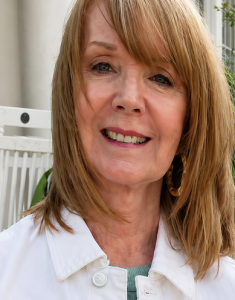
Doris DeMato, PhD, LPC
Read More
Douglas Stell, MA, Resident in Counseling
Read More
Dr. Gary Sibcy
Read More
Emily Abban, MA, Resident in Counseling
Read More
Emily Hilton, PhD, Licensed Clinical Psychologist
Read More
Evan Tyler, MA, Resident in Counseling
Read More
Fara Ravaoarimanga, MA, Resident in Counseling
Read More
Genevive Drews, MA, LPC
Read More
Jackie Williams, MA, LPC
Read More
Jacqueline Coggins
Read More
Jessica Hauser, LPC
Read More
Joan Reece, MA, Resident in Counseling
Read More
Joelle Yutzy, MA, Resident in Counseling
Read More
Jonathan Durst, MA, LMHC, LPC
Read More
Joshua Love, Clinical Psychologist
Read More
Justin Cook, MA, LPC
Read More
Karina Blest, MA, Resident in Counseling
Read More
Kasdyn Waldron
Read More
Kayla Thompson, Clinical Intern
Read More
Kevin Cottrell
Read More
Kristina Curott
Read More
Krystal Saint James, Behavioral Health Technician III
Read More
Laura Holmes, MA, LPC, CCTP-II
Read More
Lauren Burns, LPC
Read More
Lauren Rowell, LPC
Read More
Libby Geddes, Ed.D., NCC, LPC
Read More
Lori Ball, PMH-CNS, FNP
Read More
Lynnette Shadoan, MA, LMFT, LPC
Read More
Maddie Branner, MA
Read More
Mady Farley, MA, Resident in Counseling
Read More
Marie St. Louis, LMHC, LPC
Read More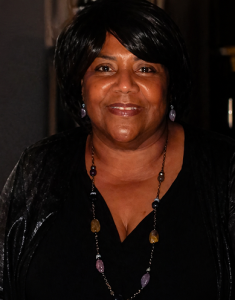
Martha Meadows, LCSW
Read More
Matthew Scott, LMFT
Read More
Mikey Morales, MA, Resident in Marriage & Family Therapy
Read More
Molly Eckels, Master’s Level Clinical Mental Health Counseling Intern
Read More
Morghan Luck
Read More
Phylicia Jemmott, MA, Resident in Counseling
Read More
Reanna H. Burch, LCSW
Read More
Sam Daniels, MA, Resident in Counseling
Read More
Susan Best, LCSW
Read More
Tiffany McCann, MA, LPC, CRC, PBS-F
Read More
Tori Gittens, MA, Resident in Counseling
Read More
Victoria Jacob, MA, Resident in Counseling
Read More